
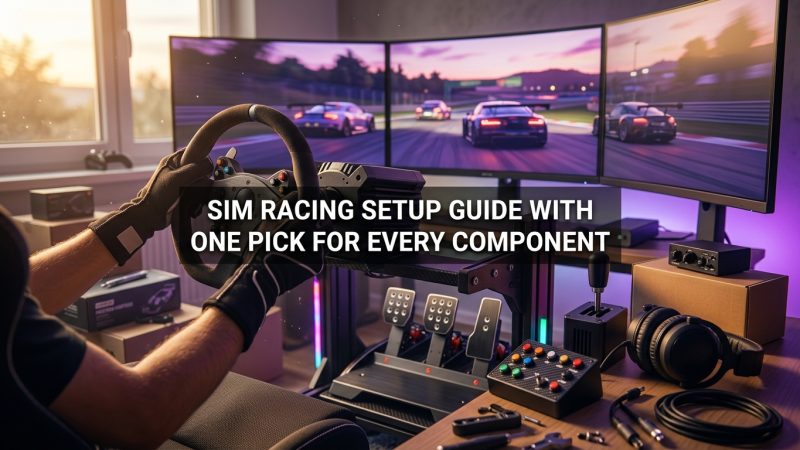
Sim Racing Setup Guide With One Pick for Every Component
Building a sim racing setup can feel overwhelming, with dozens of wheels, pedals, cockpits, and displays competing for attention. The easiest way…
SUGGESTED
TRENDING NOW
sim-racing
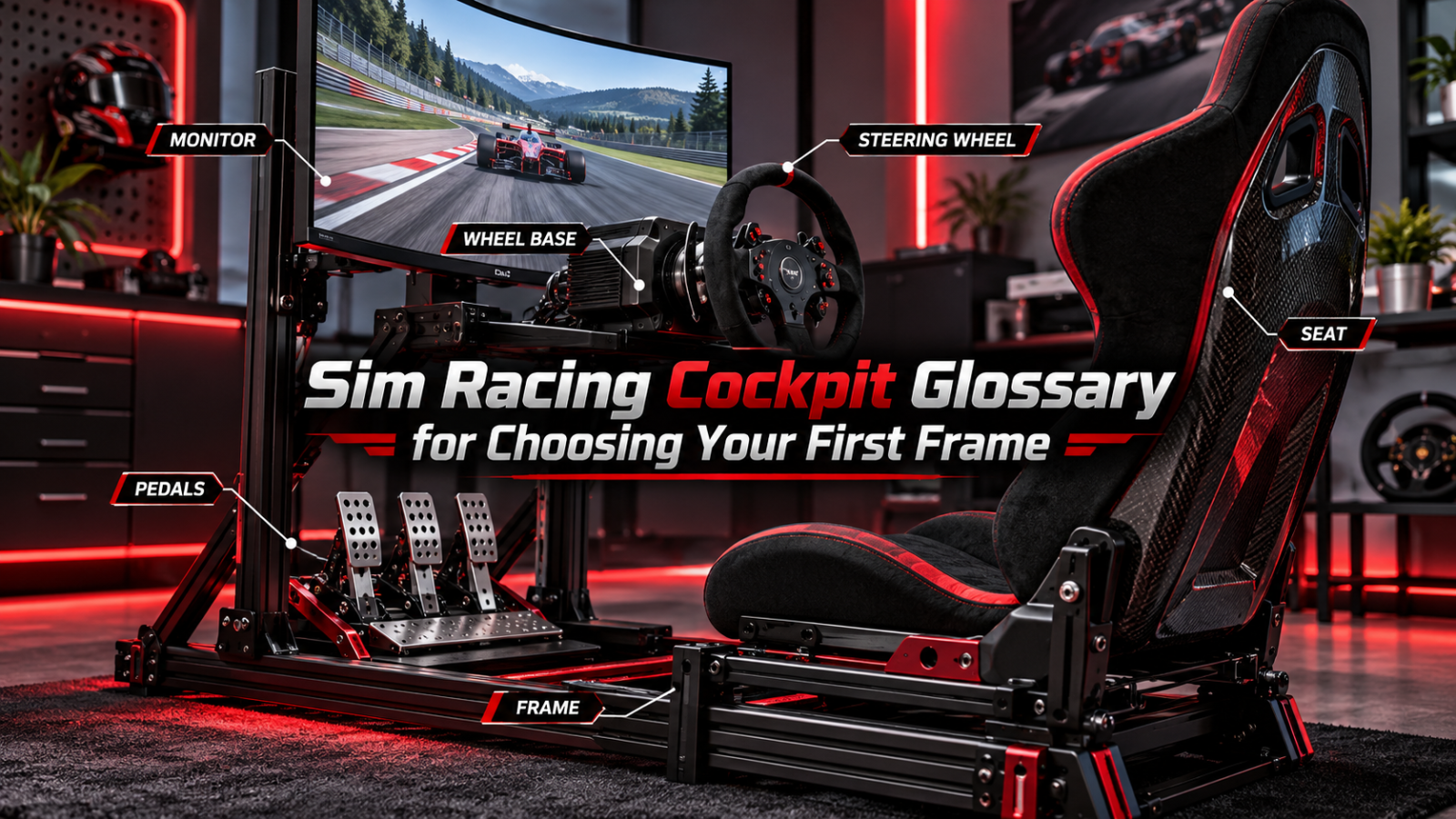
Shopping for a sim racing cockpit quickly brings unfamiliar words, from aluminum profile sizes to side mounts, flex, and tactile transducers. Understanding them makes product pages easier to compare and helps you avoid buying a frame that cannot handle your wheelbase. This glossary explains the essential terms in plain English, grouped by topic, with a quick reference table at the end.
The frame is the backbone of any sim racing cockpit, and its design determines stability, adjustability, and how much room it takes up.
Aluminum profile designs dominate the high end because they can be adjusted in almost any direction and extended later. Brands like Trak Racer, Sim-Lab, and Next Level Racing all offer profile-based frames.
Rigidity matters more as wheelbases get stronger, since any movement in the frame blurs the force feedback you feel through the wheel.
For direct drive wheelbases above roughly 10 Nm, a sim racing cockpit with a large-profile front upright and wheel deck helps eliminate flex. Load cell brake pedals also need a stiff pedal plate, since they measure pressure rather than travel.
How you sit changes the feel of every car, so cockpit listings describe seating positions carefully.
Seating is where a sim racing cockpit feels most personal. Most drivers start in GT position because it suits the widest range of games. A sim racing cockpit that offers both layouts is worth considering if you enjoy F1 titles.
Mounting terms tell you whether your hardware will physically fit the frame.
Check the bolt pattern of your wheelbase before choosing a sim racing cockpit, since an incompatible deck means buying extra adapter plates.
A sim racing cockpit has to fit your room and routine as well as your hardware, so listings also describe size and everyday convenience.
Measure your space before ordering, and allow extra room behind and beside the seat. A compact sim racing cockpit that fits your room will be used far more often than a larger one squeezed into a corner.
Delivery size matters too. Aluminum profile frames arrive flat-packed in heavy boxes and need a few hours to assemble and adjust, so plan the setup time along with the space. Many owners keep spare T-nuts and an Allen key set nearby for future tweaks to their sim racing cockpit.
Beyond the wheel itself, extra hardware can add physical sensations to a racing sim cockpit.
These upgrades come later for most drivers, but choosing a sturdy frame now keeps the option open. A sim racing rig that rattles at low force will struggle once motion or strong vibration is added.
Term
Meaning
Wheel stand
Light frame used with an existing chair
Aluminum profile
Extruded beams joined with brackets
Flex
Unwanted frame movement under load
Wheel deck
Plate or beam holding the wheelbase
GT position
Upright, road car seating
Formula position
Reclined, single-seater seating
Side mount
Wheelbase attached from its sides
Bass shaker
Device adding vibration feedback
Knowing these terms turns a confusing spec sheet into a clear comparison. Start with a frame rigid enough for your wheelbase, choose a seating position that suits your favorite games, and confirm every mount before ordering. Which sim racing cockpit feature matters most to you?
sim-racing
Building a sim racing setup can feel overwhelming, with dozens of wheels, pedals, cockpits, and displays competing for attention. The easiest way…

Sim racing has never offered more choice, and that makes the first step harder. The best racing simulator for one driver can be the wrong fit for…

Racing games range from colorful kart battles to painstakingly realistic recreations of real circuits. So what is sim racing, and how is it different…