
How EA Going Private in $55B Deal Impacts WRC and F1 Games
A historic paradigm shift has officially reshaped the gaming industry as Electronic Arts (EA) completed its monumental transition into a private company through a staggering $55 billion buyout. Backed by a global…
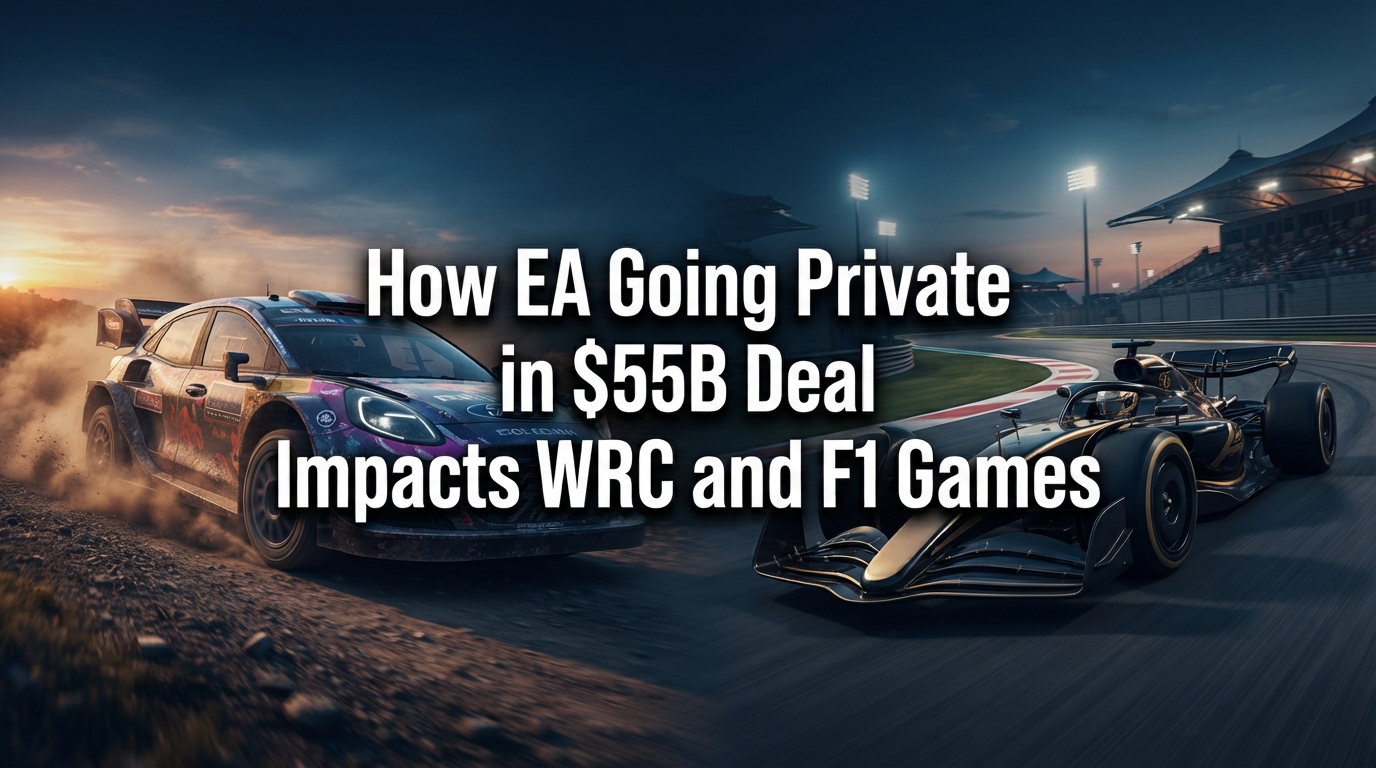
A historic paradigm shift has officially reshaped the gaming industry as Electronic Arts (EA) completed its monumental transition into a private company through a staggering $55 billion buyout. Backed by a global consortium spearheaded by Saudi Arabia’s Public Investment Fund (PIF), this massive capital restructuring frees the publisher from the relentless pressure of quarterly earnings reports and Wall Street market expectations. More importantly, it sends powerful positive ripples of change down to its racing game powerhouse subsidiary, Codemasters.
Unburdened by rigid budgets and tight turnaround deadlines, the future of flagship racing franchises like EA Sports WRC and F1 has entered a fascinating new era. Development teams now possess the creative freedom to experiment, refine tire and surface physics, enhance graphics, upgrade sim rig steering feedback, and spend critical time polishing titles to eliminate long-standing technical hiccups. This deep-dive analysis explores every dimension of how EA’s privatization will propel these world-class racing titles forward, alongside the potential hurdles racing enthusiasts should watch for.
Behind the EA Acquisition and the New Direction Unhindered by Stock Market Pressures
The monumental $55 billion buyout, backed by global investment heavyweights like the Public Investment Fund (PIF), has officially taken Electronic Arts private. Freeing EA from public market status eliminates the relentless pressure to report soaring quarterly earnings and satisfy short-term retail investors.
Stepping away from public company constraints gives leadership the confidence to invest in high-risk game projects. Racing game developer Codemasters could finally gain the creative freedom to experiment with new game engines and refine physics engines to unprecedented levels of realism, unburdened by strict budget constraints.
How the Future of EA Sports WRC Will Unfold Under the New Capital Structure
Officially licensed rally games remain a cornerstone franchise for the publisher, yet competition in the racing genre is exceptionally fierce. Having deep-pocketed backers empowers the development team to secure adequate budgets for graphic overhauls and finally tackle chronic frame-rate stuttering issues.
Rally fans could witness major patch updates or sequels centered on enhanced surface realism and superior sim rig steering feedback. Team and driver licensing management is also poised to become significantly more streamlined thanks to long-term capital backing from investors.
A Deep Dive into Rally Fans’ Expectations for Track Design and Physics
Moving under the umbrella of heavily funded ownership raises fan expectations across other dimensions, such as more immersive trackside environments alongside dynamic dust storms or mud mechanics that directly impact handling. Introducing fresh game modes tailored for off-road enthusiasts represents another compelling storyline to monitor going forward.
The Fate of F1 27 and Global Racing Licensing Agreements
The F1 series has consistently served as a massive revenue generator for EA. Transitioning into a private entity eases the pressure of rushing out annual releases under tight deadlines, allowing the team sufficient time to polish bugs and deliver requested player features.
Sequels like F1 27 could feature complete overhauls to team management systems and weather simulation. Fans who love fine-tuning car setups to conquer legendary tracks are guaranteed a deeper, more responsive steering wheel experience.
Managing Long-Term Formula 1 Licensing and Agreements
Financial stability following the transition strengthens the company’s negotiating leverage with the FIA, minimizing risks regarding game development rights or restricted timeframes, which ultimately benefits long-term franchise continuity.
Inside Codemasters: Navigating a Critical Organizational Transformation
The consolidation of power under a major investor group raises questions regarding internal studio direction. Internal structural realignments may occur to eliminate redundancies and optimize collaboration with EA’s central teams.
Opportunities for Team Expansion and Production Scale
Sustained budget support can help attract top-tier talent from the driving simulation industry, accelerating development pipelines and refining production quality beyond previous benchmarks.
The Challenge of Preserving Racing Heritage and Identity
Despite robust financialbacking, a core challenge lies in safeguarding the distinct spirit and identity that fans adore, ensuring it isn’t diluted by corporate commercial mandates.
Elevating the Sim Racing Experience Through PC Hardware and Peripherals
Progressive game improvements naturally demand greater hardware resources. Preparing PC rigs and choosing appropriate peripherals remains essential for racing enthusiasts.
- Upgrading GPUs and memory to support 4K racetrack graphics.
- Investing in Direct Drive steering setups to accurately feel surface feedback.
- Configuring PC cooling systems to sustain long endurance racing sessions.
Summary of Long-Term Impacts Sim Racers Must Monitor
EA’s privatization acts as a double-edged sword, sparking both excitement and concern. If investors grant studios full creative freedom, we will witness exceptional racing quality; however, internal restructuring could inadvertently impact development teams.
- Pros: Teams gain development autonomy and relief from stock market pressures.
- Cautions: Internal administration and personnel shifts remain variables to watch.
- Core Strategy: Focus shifts toward long-term quality over rapid production cycles.
Key Takeaways: How EA Going Private Reshapes the Future of WRC and F1
Electronic Arts’ historic $55-billion acquisition and transition driven by primary stakeholder PIF frees the company from public stock market constraints, sending positive shockwaves and charting a new trajectory for racing titles, particularly Codemasters.
- Greater Development Freedom: Eliminating stock market and quarterly earnings pressures empowers teams to fund high-risk projects and polish games to perfection.
- A Brighter Future for EA Sports WRC: Long-term financial backing opens doors to resolve chronic weaknesses, boost environmental graphics, and refine sim rig steering physics.
- F1 Series Flexibility: Mitigates yearly crunch timelines, giving developers more bandwidth for new features, team management upgrades, and seamless license renewals.
- Challenges and Cautions: While creative freedom flourishes, organizational restructuring and personnel stability require close observation to protect franchise identity.
Ultimately, this transition marks a pivotal step that could elevate the WRC and F1 franchises to elite standards, though long-term success hinges entirely on stakeholder management and true creative autonomy granted to development teams.